Feed Mill Pelletizing Systems & Equipment | Atlas Yem
News

Feed Mill Pelletizing Systems
What Are Feed Mill Pelletizing Systems and How to Choose Them?
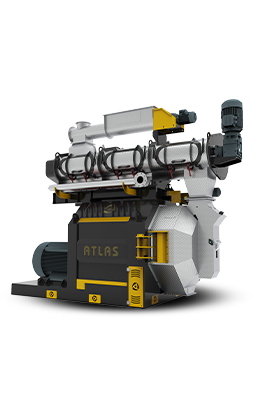
Feed mill pelletizing systems are industrial production lines that mechanically compress powdered feed rations under high temperature, steam, and pressure into cylindrical pellet forms. To increase nutrient digestibility and reduce logistics costs in the livestock industry, the most effective pelleting solution is high-pressure pellet press systems that optimize steam conditioning and minimize energy consumption per ton.
Why Use Pelletizing Systems in Feed Mills?
The primary reason for choosing the pellet form over loose powder rations in feed production is to prevent animals from sorting the feed, ensuring balanced nutrient intake in every bite. The high-temperature steam applied during the pelleting process gelatinizes the starch within the raw material, raising digestibility to over 90%.
The next-generation pelletizing solutions developed by Atlas Yem directly enhance the operational efficiency of enterprises through the following advantages:
-
Low Operational Cost: Thanks to our optimized mechanical designs, energy consumption per ton is reduced by up to 20%.
-
High PDI Value: Our conditioner units offering perfect steam infusion deliver a high Pellet Durability Index (PDI) that prevents feed from breaking during transport.
-
Zero-Tolerance Production: Manufactured under ISO 9001:2015 standards, our machines undergo rigorous stress tests simulating real field conditions before plant delivery.
Pelletizing Systems vs Flaking Technology: Which One to Choose?
Choosing the right thermal processing technology during the feed mill setup phase directly impacts ration efficiency. The table below provides a clear comparison between industrial pelletizing systems and flaking technology:
| Feature / Parameter | Pelletizing Systems | Flake Technology (Flaking Mill) |
| Core Process Type | Compressing powder feed with steam into pellets | Softening grain in a steam chest and rolling it |
| Target Animal Group | Poultry, cattle, and pet food production | Mainly beef and dairy cattle (ruminant) rations |
| Starch Gelatinization | Medium to High digestibility increase | Maximum digestibility over 90% |
| Energy Savings | Up to 20% savings with new-gen motor drives | Heavy-duty precision waltz mechanism efficiency |
| Advantages | Logistics ease, prevents dust formation and waste | Proactive increase in milk and meat yield |
| Disadvantages | Wear and tear cost of dies and rollers | Applicable only to specific grain groups |
What Are the Integrated Feed Mill Sub-Systems?
A modern feed production plant does not consist of a pellet press alone. The fully synchronized operation of systems eliminates capacity bottlenecks. The integrated ecosystem built with Atlas Yem engineering consists of the following sub-categories:
1. Raw Material Preparation & Process Line
-
Crushing Systems: Ideal micron sizing is achieved through hammer mill and vibrating screen combinations.
-
Dosing Units: Automatic weighing systems are utilized for precise ration preparation.
-
Mixing Systems: Homogeneous mixing is achieved with twin-shaft and horizontal ribbon mixers.
-
Liquid Additive Equipment: Ensures homogeneous spraying of nutritional oils and enzymes into the feed.
2. Forming, Logistics & Storage
-
Screening and Ventilation (Cooling) Systems: Removes moisture from the hot pelleted feed to prevent molding.
-
Transport and Routing Equipment: Moves the feed without breaking via elevators, conveyors, and distributors.
-
Storage Systems & Packaging Units: Complete the process with automatic bagging and silo storage systems.
-
Recycling Technologies: Reclaims off-spec pellets, crumbs, and process dust back into the production line, lowering raw material costs with zero waste.
Sıkça Sorulan Sorular - S.S.S
What is the share of the pelletizing system in feed mill installation costs?
The pelletizing system is one of the largest investment items within feed mill installation costs because it houses the high-pressure press, conditioner, and cooler units. When calculating the total cost of ownership (TCO), operational electricity consumption and maintenance expenses must be factored in alongside the initial purchase.
What is the difference between a belt-driven and a geared pellet press?
Geared pellet press models offer up to 15% higher power transmission efficiency compared to belt-driven systems. This directly lowers the electricity bill and minimizes mechanical downtime under heavy-duty operational conditions.
What is the most critical factor affecting pellet quality (PDI)?
The most critical factor affecting the pellet durability index is the conditioning stage. The raw material staying at the correct temperature and duration in the steam tower ensures full starch binding, which prevents the feed from turning back into powder.
How is the pellet diameter determined in animal feed?
Pellet diameter varies according to the animal species and age for which the ration is produced. While a 2-3 mm crumb form is preferred in poultry chick feeds, 6-8 mm diameter pellet dies are utilized in cattle fattening feeds.
How do recycling lines contribute to the pelleting system?
Recycling technologies (shredder and trommel sieve lines) feed off-spec dust and broken pellets back into the production line without compromising raw material purity. This process proactively reduces the factory's waste overheads.
People Also Ask - PAA
How many kW of motor power should a pellet machine have?
The motor power of a pellet mill varies between 45 kW and 315 kW depending on the target hourly production capacity (tons/hour) and the density of the ration (cattle, poultry, or pet food) to be processed.
What is the difference between a home-use pellet machine and industrial systems?
While home-use machines produce limited outputs for small farms with low motor power, industrial systems manufactured by Atlas Yem are engineered for automated, high-tonnage factories based on 24/7 continuous operation.
What is the lifespan of a pellet die (matrix)?
Die and roller lifespan depends on the abrasiveness of the raw material used (e.g., mineral ratios) and metallurgy quality. Our ISO 9001:2015 certified special alloy dies offer a higher tonnage lifespan compared to standard alternatives.
If you enjoyed our content "Feed Mill Pelletizing Systems" please visit our News page.
For more information, please contact us.